At a glance |
|---|
|

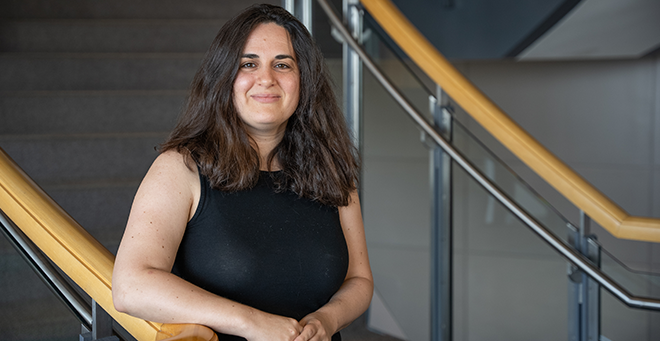
Photo: Bryan Goodchild
Two UMass Chan Medical School postdoctoral researchers are among a small group of recipients of a highly competitive fellowship award supporting postdocs and physician-scientists in the mid to late stages of their research training in Massachusetts.
Anna Moyer, PhD, a postdoc in the lab of Summer Thyme, PhD, associate professor of biochemistry & molecular biotechnology; and Flaviane Silva, PhD, a postdoc in the lab of David Guertin, PhD’02, professor of molecular medicine, are among the cohort of eight 2026 Charles A. King Trust Postdoctoral Fellowship Program awardees.
“I feel honored to have received this fellowship. I think for many postdocs at UMass Chan and all around the country, there’s been some unease related to available funding. To have two years where I can focus on my research is such a blessing and I’m grateful for the Charles King Trust for investing in my future as a scientist,” Dr. Moyer said.
“It’s a long path when you choose an academic career. Since 2010, I’ve been researching how metabolism relates to disease development. I’m very fortunate to have a great research environment at UMass Chan and getting this Charles King Trust Fellowship is really important for my career and future, especially given the current funding challenges,” Dr. Silva said.
Moyer and Silva will each receive up to $221,000 over two years. The fellowship program is designed to support biomedical research in areas that focus on the causes of human diseases with goals toward improving treatment.
Using zebrafish to model Down syndrome pathogenesis
Moyer’s project focuses on Down syndrome, which is the most common genetic cause of intellectual disability and affects more than 5 million people worldwide. Moyer will be working on new approaches for using zebrafish to model Down syndrome pathogenesis and identify molecular pathways that could be targeted to improve brain development.
“I am hoping to understand more about how the brain develops in people with Down syndrome. My project is specifically looking at how the cerebellum is developing as a part of the brain that is important for balance and coordination and may also play a role in cognitive function,” Moyer said. “In the Thyme lab, we’re developing new zebrafish models to study Down syndrome on a larger scale. We’ve taken the zebrafish versions of chromosome 21 genes and put them into our fish to see how they impact development.”
Moyer, who joined UMass Chan in 2022, said her research is inspired by her brother Sam who has Down syndrome. In 2010, Moyer launched the website Accessible Chef, with free visual recipes and other resources to help teach cooking skills to individuals with disabilities at home or in special education classrooms. She will be using part of her fellowship award to fund a summer undergraduate research student (who also has a family member with Down syndrome) in 2027 and organize joint meetings for UMass Chan labs that study Down syndrome.
Moyer is from State College, Pennsylvania. She earned her PhD in human genetics from the Johns Hopkins University School of Medicine.
What is autosomal dominant polycystic kidney disease?
Autosomal dominant polycystic kidney disease, or ADPKD, is the most common inherited genetic disorder, affecting approximately 1 in 500 people worldwide, and is caused by fluid-filled cysts growing inside the kidneys, leading to kidney failure.
Silva is investigating how nutrient-sensing proteins contribute to kidney cyst formation in ADPKD with the goal of identifying new therapeutic targets.
“There is no cure. Currently, there is only one treatment option that cannot be used in all patients. ADPKD progresses to end-stage renal cystic disease, requiring life-long care and, in most cases, a kidney transplant. Any treatment that can slow disease progression can increase the survival and quality of life of ADPKD patients,” Silva said.
In the Guertin lab, Silva is part of a team studying how cells sense and respond to nutrients. They discovered that in kidney cells, the regulation of amino acid metabolism is related to the development of kidney cysts. They’re now investigating the mechanism that controls cyst growth using cell models, animal models and human samples.
Silva earned her PhD in human physiology at the University of São Paulo in Brazil before joining UMass Chan in 2023. She is the recipient of a Morningside Graduate School of Biomedical Sciences Faculty Award for her mentorship and contributions to the laboratory training environment at UMass Chan.