


Getting to Know Hank Adelmann, PhD
Date Posted: Wednesday, March 11, 2026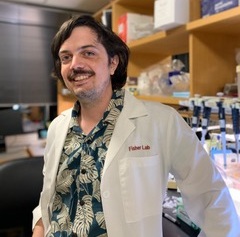
For the March 11, 2026 meeting, we are pleased to welcome Charles “Hank” Adelmann, PhD, a postdoctoral fellow in the laboratory of David Fisher at Harvard Medical School, for a special Fluxing Star talk. Fluxing Star presentations highlight emerging leaders in metabolism research—scientists who are early in their careers but have already made significant contributions to the field.
Dr. Adelmann completed his PhD in the laboratory of David Sabatini at the Whitehead Institute, where he discovered that MFSD12 functions as the primary cysteine importer for melanosomes and lysosomes. This work uncovered an important molecular mechanism underlying both human pigmentation and certain lysosomal storage diseases.
Building on these findings, Dr. Adelmann has continued to study MFSD12 during his postdoctoral research. His recent work has shown that this cystine import pathway plays a critical role in supplying reduced thiols within lysosomes—an essential process that supports normal embryonic development.
As part of the MetNet tradition, we asked Hank a few lighthearted science and non-science questions to get to know him a little better.
Any good movies, series, or books you recommend?
The Illustrated Man by Ray Bradbury and The Expanse on Amazon are current favorites. I also enjoy books about science and scientists—What Is This Thing Called Science? by Alan Chalmers and Natural Obsessions by Natalie Angier are classics.
What’s a hidden talent most people wouldn’t know about you?
I play accordion. Lately my accordions have been gathering a lot of dust, but I’m still a big Weird Al fan. Dare to Be Stupid!
What hobbies keep you busy outside the lab?
I like making tiki cocktails at home and working on small 3D printing projects. I mostly print practical pieces—things like holders for USB drives or pipettes. If I can replace an overpriced piece of lab plastic with something I printed myself, it’s very satisfying.
What profession might you have chosen if you weren’t a scientist?
Maybe something more “in the field.” I could see myself as a marine biologist counting lobsters or an entomologist collecting interesting insects.
What do you enjoy most about your work?
It’s the best job in the world. I get to think about science and test ideas all day. I’ve also really enjoyed moving beyond the trainee phase, because now I get to interact with younger scientists who are just starting out and watch them discover how fun science can be.