




Mapping a Plan to Blood Glucose Control and Diabetes Management
Conversation Maps® to teach diabetes self-management
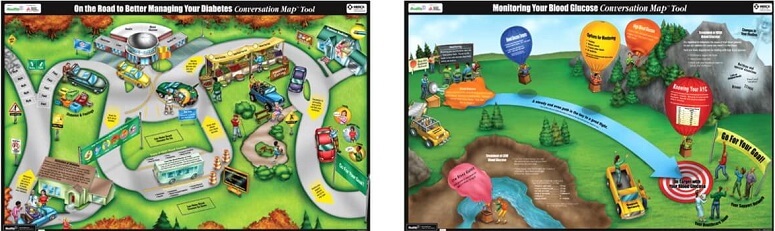
The UMass Memorial diabetes self-management education program is recognized by the American Diabetes Association. It’s designed to provide information, motivation, and support. Diabetes educators use Conversation Maps to teach individuals about lifestyle modifications such as adopting healthy eating habits, managing medication, engaging in physical activity, and other topics.
Diabetes Conversation Maps
Conversation Maps® are designed to promote interactive discussion among people living with diabetes in small-group settings. Each map addresses a different topic area to assist with self-management.
”The visual aspect of the Conversation Maps® has been found to encourage interaction among those attending our education workshops,” said Cheryl Barry, RN, CDCES, Manager of Diabetes Education at UMass Memorial. “The maps help empower people to control their diabetes more effectively through self-management."

Lowering A1c with Diabetes Education
Diabetes education has proven to lower A1c by as much as 2% (similar to adding a medication but without the side effects). Research indicates that individuals who receive diabetes education are more likely to adhere to prescribed medication regimens and effectively manage their blood glucose, blood pressure, and cholesterol levels. As a result, those people have lower health costs.
The American Diabetes Association recommends at least 10 hours of diabetes education. Medicare benefits include 10 hours of initial education plus two hours of follow-up each year. Commercial insurance offers similar benefits. More than half of the 38 million Americans diagnosed with diabetes have not taken advantage of the benefits of diabetes education.
Patient Success Story: Kevin Brady
Kevin was diagnosed with type 2 diabetes in his mid-50s but didn’t take it seriously because he didn’t feel sick. Over time, his blood sugar continued to rise despite increased medication, and he developed neuropathy, numbness in his hands, and liver and heart problems.
When his doctor explained that uncontrolled blood sugar was contributing to these issues, Kevin decided to make a change. He was referred to the UMass Memorial diabetes education program, where he found practical, interactive guidance focused on real-life strategies. Diabetes education helped him lower his A1c from 8% to 6% and has maintained it. He also lost 40 pounds by eating healthier and exercising regularly.
Kevin learned how carbohydrates affect blood sugar, how to read nutrition labels, manage portions and plan meals, including when eating out. He can still enjoy his favorite foods in moderation.
Today, Kevin’s liver and heart issues are under control, his blood pressure has normalized, his neuropathy has improved and he is taking less medication. Now in his 60s, he is motivated to stay healthy.
