



Re-engineering “Bad Fat” into “Good Fat” to Treat Type 2 Diabetes
Date Posted: Monday, January 08, 2024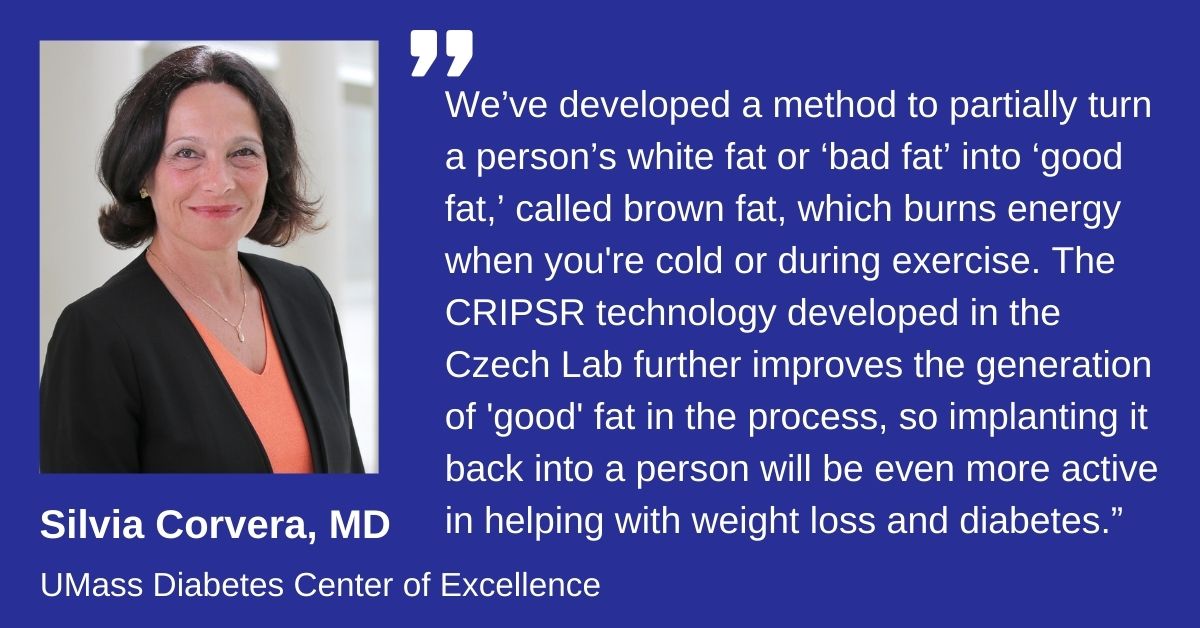
CRISPR gene-editing technology has transformed biomedical research by allowing scientists to precisely modify DNA and study gene function. The laboratories of Silvia Corvera, MD, and Michael Czech, PhD, have been applying it to modifying human fat cells and transplanting them as a potential therapy for type 2 diabetes and obesity.
The strategy focuses on converting energy-storing white fat into a more metabolically active form of fat that burns energy. White fat stores excess calories, while brown fat consumes energy to generate heat and improve metabolism.
“We’ve developed a method to partially convert a person’s white fat into brown-like fat,” said Dr. Corvera, Professor in the Program in Molecular Medicine and Endowed Chair in Diabetes Research. “These metabolically active fat cells burn energy and improve metabolic function.”
The engineered cells are transplanted into novel humanized models, where they improve metabolism, enhance glucose tolerance, and reduce fat accumulation in the liver, including animals fed a high-fat diet.
The Czech lab also developed a safer method for delivering the CRISPR editing system. Instead of permanently inserting gene-editing components into cells, CAS9 proteins are delivered directly and degrade within hours after editing the DNA, reducing the risk of immune reactions or toxic effects and making the approach more suitable for therapeutic use.
Drs. Czech and Corvera are currently working to advance this technology toward preclinical development, with the goal of testing their fat-cell therapy in human clinical trials. If successful, the strategy could offer a new way to treat metabolic disease by harnessing the body’s own fat cells to improve energy balance and glucose control.