
Q&A with Mariana Noto Guillen
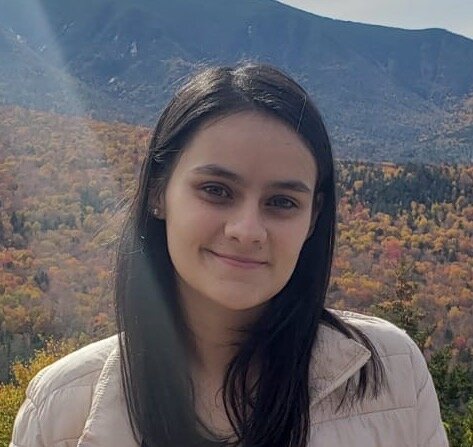
Mariana Noto Guillen did her thesis work in Amir Mitchell’s lab and is currently a postdoc in the lab.
Tell us a little bit about yourself. Where are you from? Tell us about your journey to your current position.
I am from Asuncion, the capital of Paraguay, in the heart of South America. In my senior year of high school I decided that I wanted to study biology. After looking into the biology degree and prospects of work in Paraguay, it became clear to me that I didn’t have many options within my home country. I am fortunate to have family in Argentina, where the University of Buenos Aires (UBA) is an excellent place to study the natural sciences and has a long track record of good research. I still remember having my mind blown on my first day in the Introduction to Cell and Molecular Biology class. I learned what a PhD was and I decided I wanted to do research.
I was a research volunteer, and later an undergraduate research fellow, in a Nuclear Receptors and Chromatin lab in the Institute of Physiology, Molecular Biology and Neuroscience at UBA. There, I did research for my undergraduate thesis studying how steroid nuclear receptors interact to modulate immune responses. This solidified my intensions of becoming a researcher.
I was encouraged by my Systems Biology Professor, Dr. Alejandro Colman Lerner, to apply to PhD programs in the U.S. I also met Dr. Lucio Castilla at a conference where he told me about UMass. I was drawn to the Systems Biology Department, and now here I am!
What motivated you to become a scientist?
I must admit that school never really interested me, I wanted to be a ballerina! I competed in the National Math Olympiad during my freshman year of high school. I was then selected to attend an intensive training workshop that focused on math and problem solving. This opened my eyes to a new world where classes could be interesting and challenging, and doing math and solving all kinds of problems could be fun.
In my senior year of high school I had a biology assignment to track a trait that runs in my family as an exercise to understand how genetics work. I chose migraines that ail my parents, some of my brothers and myself. In doing this exercise I became interested in understanding what makes us us, right down to our DNA, our cells and our complex bodies. Even though I ended up studying bacteria and how we can kill them to stop infections, understanding complex systems and how they work is the common thread that is woven throughout my career.
Why did you start working on your thesis project? What first drew you to the question?
I was drawn by how ambitious the project was. Previously, in the Mitchel lab, we had performed genetic screens with up to 24 samples. My thesis project aimed to screen dozens, and even hundreds of drugs to understand their mechanisms of action. I wanted to take up this challenge and see how far we could go.
In 3-4 sentences can you tell us what you think are the key main findings from your work.
Antibacterial activity of nonantibiotics is orthogonal to standard antibiotics
We found that most non-antibiotic drugs that inhibit bacterial growth do so through different mechanisms than standard antibiotics. This is exciting because it suggests that there are new targets we could exploit to design new antibiotics and try to resolve the antibiotic resistance crisis we’re facing. Another important finding was that, even though they act through different mechanisms, some non-antibiotic drugs can select for antibiotic cross-resistance in vitro. This suggests that we need to investigate what is happening to the bacteria in our gut and if they are evolving in similar ways when exposed to non-antibiotic drugs.
Can you remember the first experiment you did in Amir’s lab?
I can! We wanted to find all E. coli auxotrophs, bacteria that need a specific nutrient from the environment to be able to grow, that can be rescued by other bacteria that produce it. My first experiment consisted of growing a wild-type E. coli on a nutrient poor media, generating conditioned media with all the metabolites the bacteria secreted. I then tested the conditioned media on known auxotrophs to see if it was able to rescue their growth. This allowed me to design a screening strategy to identify all E. coli auxotrophs using a single gene deletion library.
What was the most exciting moment for you overall, or was there a particular result that surprised you?
The moment when I plotted the hierarchical clustering of my antibiotic screen results and I could see that we were capturing the mechanism of action of standard antibiotics! This was the third iteration of the experiment and we finally got it right.
What was the most difficult experiment to carry out successfully?
A genetic screen that tested 192 conditions, 186 drugs in total. I had to repeat the whole screen, through the sequencing and analysis, a total of three times. Every time we learned what to improve so we could capture the sensitivity profiles of antibiotics and compare them to non-antibiotic drugs. The key was to find the right concentration of drug that applies enough selective pressure that we see a signature, but not so much that noise and super resistant bacteria take over.
In your opinion, what are the most pressing questions for the field currently?
I think it is important that we find out whether bacteria in our gut can evolve antibiotic cross-resistance after prolonged exposure to non-antibiotic drugs. This could have important implications for the antibiotic resistance crisis we’re facing. Michelle, an MD PhD student in the lab, is trying to tackle this question using mouse gut microbiome models.
Do you have any advice for other young scientists at any career stage from undergraduate through postdoc?
Don’t be afraid to work hard, it’s important to have a work-life balance but it is also important to know that you get what you put in. Work hard and rest & recharge hard! Also, surround yourself with people that love what they do, who challenge you and motivate you to pursue what you love.
What do you like to do outside of work?
My current obsession is crochet. I like making all sorts of things, from E. coli plushies to shirts and cardigans. I love outdoor activities like paddleboarding, hiking, biking, and running. Lately though, I love spending time at home with my cats, Ali and Bam, cooking and trying new baking recipes.
And finally, what’s next for you?
I’m wrapping up an exciting project that was inspired by my thesis work in the Mitchell lab. I’m also looking for a lab where I can do a postdoc and eventually have my own research lab!