

Natasha Durham, PhD
 |
I have moved to a new role as of September 2026. I am a non-tenure track Instructor in the Department of Microbiology at UMass Chan Medical School. My research focus is on RNA viruses which are a major threat to human health, including HIV-1, Ebola virus, Influenza virus and Dengue virus. I am a virologist by training with additional expertise in immunology and biophysics, having worked with Dr. Benjamin Chen (my PhD mentor), Dr. Talia Swartz (post-doc mentor), Dr. James Munro (post-doc mentor) and Dr. Leslie Goo (as a Scientist I in the Goo Group at the Chan Zuckerberg Biohub San Francisco). My skills and experience are ideally suited to the development and use of (i) advanced biophysical approaches to probe mechanisms relevant to membrane fusion and viral entry, (ii) virus-based tools compatible with novel detection platforms, (iii) functional cell-based assays to validate cell-free observations and (iv) novel anti-viral therapeutics and vaccine antigens. My long-term goal is to understand the molecular mechanisms of viral infection, to inform the development of novel vaccines and therapeutics. |
|
I develop and apply functional and biophysical assays to interrogate the native structure and behavior of viral envelope proteins, and understand their contributions to the conformational landscape or ensemble found within a virus population. I am also interested in how these conformations correspond to viral functions such as viral fusion or entry inhibition, which are normally measured using bulk in vitro virological methods. During my PhD, I developed a flow-cytometry based assay to quantify T-cell infection by HIV-1 (PMID 26714702), and assess conformations of the HIV-1 Envelope protein (Env) on the surface of infected T-cells using broadly neutralizing antibodies and Env cytoplasmic tail mutants (PMID 22553332 and PMID 26136566). For the past 10 years I have been working with Dr. James Munro on the Class I fusogen of Ebola virus, the envelope glycoprotein GP. My work on GP primarily uses single-molecule Förster Resonance Energy Transfer (smFRET) imaging (Figure 1) to identify dynamic conformations that are not resolved by structural methods. Some of these conformations are enriched by neutralizing antibody binding (PMID 31952255), or are more prominant for GP mutants such as the A82V mutation (PMID 40186866) from the 2016 Ebola virus epidemic (Figure 2, collaboration with the Luban lab). |
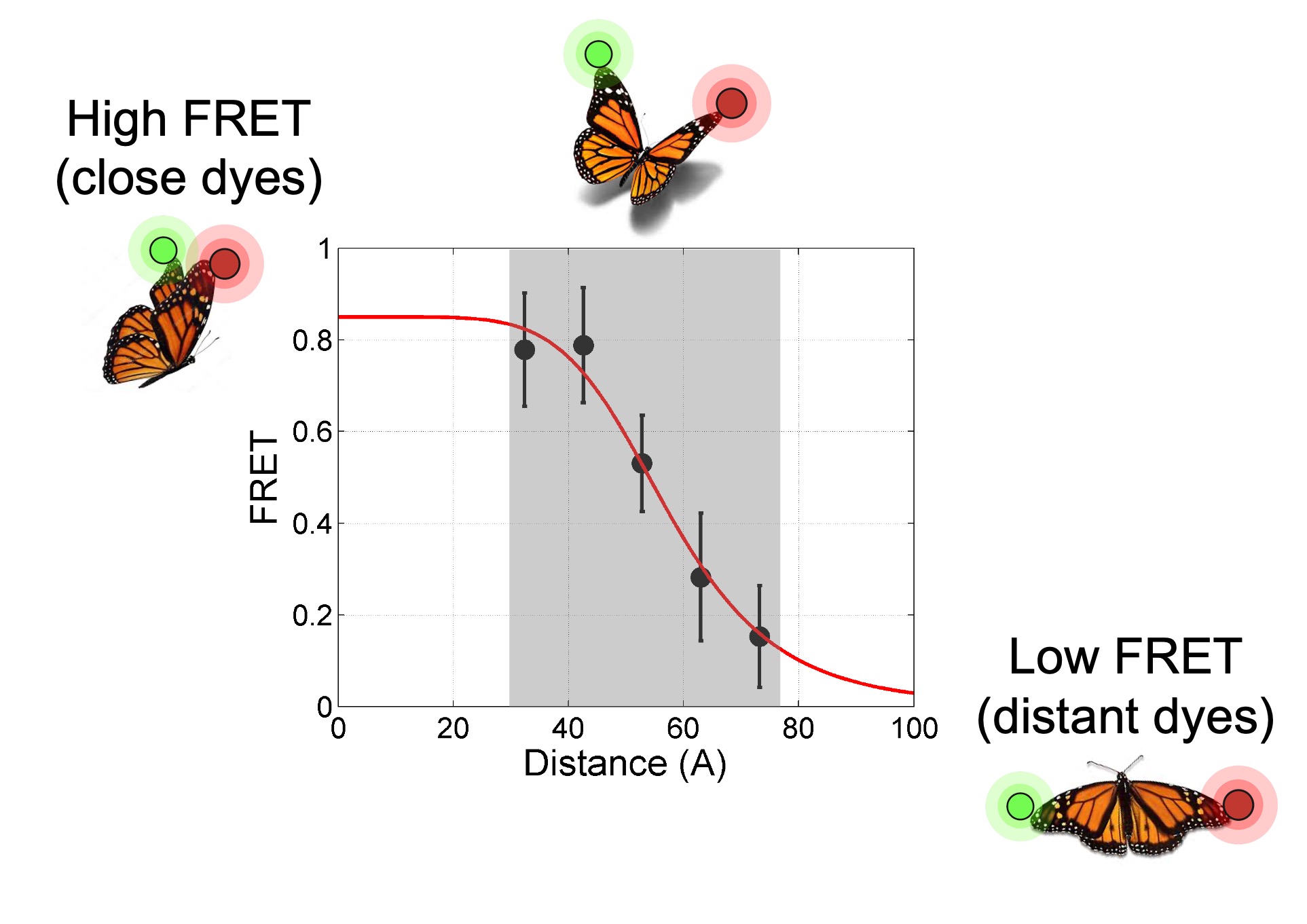
|
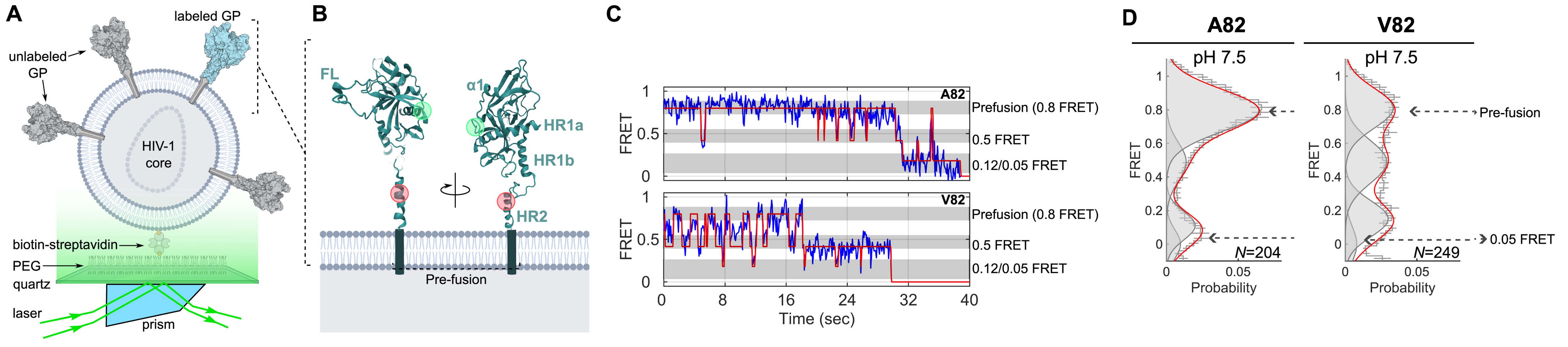
|
Recent work on Ebola GP also incorporates molecular dynamics simulations to model underlying atomic interactions, providing insight into experimental observations and informing future studies. |
|
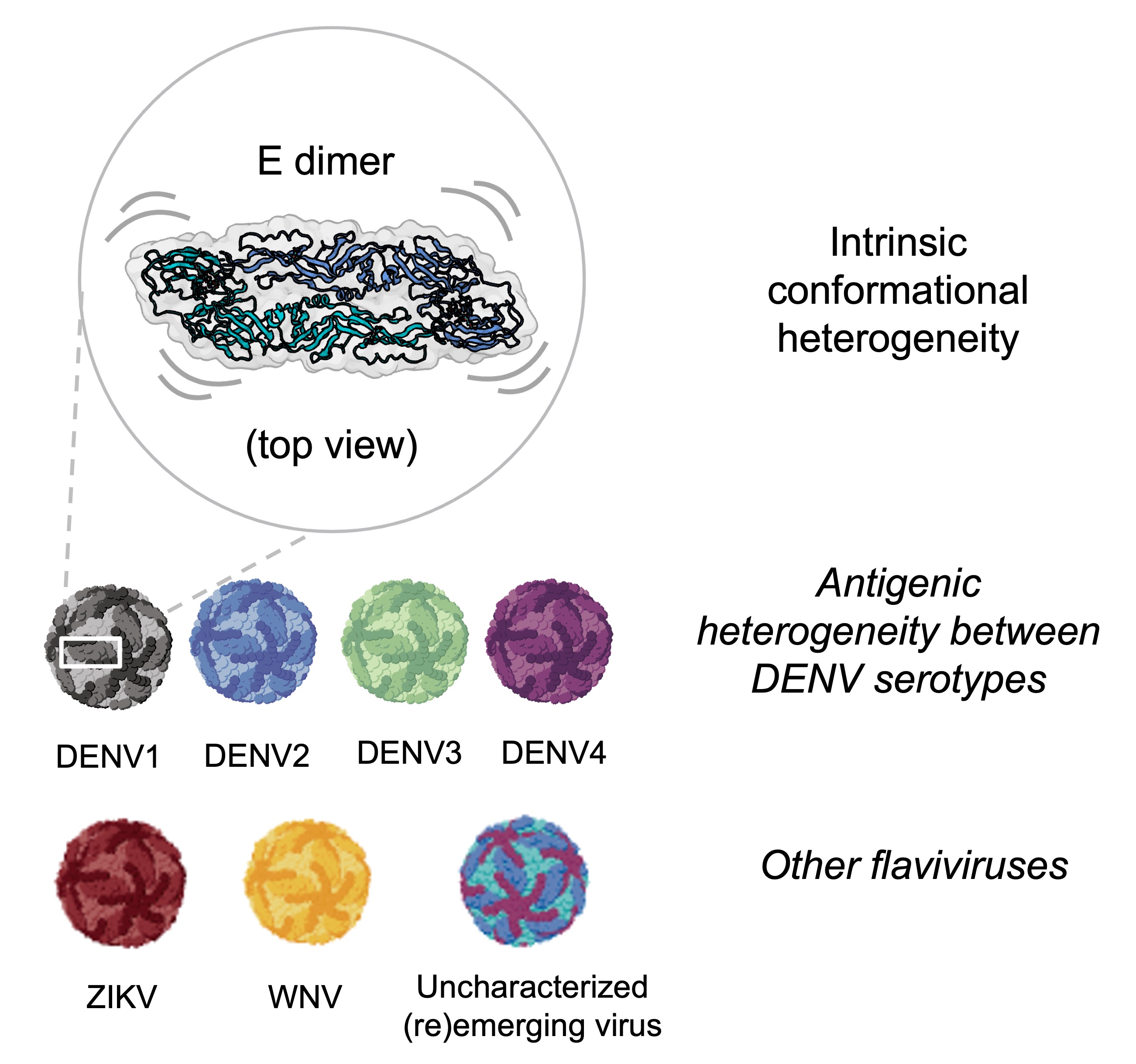
I also investigate viruses with Class II fusogens, such as the Envelope (E) protein of Dengue Virus (DENV). My initial focus is on virus entry. Some aspects of this work were carried out as part of my project component for the Junior Faculty Development Program, with the guidance of Dr. Celia Schiffer (JFDP faculty mentor). Two key antibodies for this project, J9 and J8 (PMID 31820734), were characterized as a cross-functional team effort under the Infectious Disease Initiative at the Chan Zuckerberg Biohub. 1) The dynamics of Class II viral fusogens and their interacting structural proteins. Dengue virus (DENV) is responsible for the most human arbovirus infections world-wide, with approximately 4 billion people currently residing in endemic areas. The conformational heterogeneity of DENV E is particularly complex, and includes the intrinsic dynamics or ‘viral breathing’ of E on individual virions within a viral population, as well as antigenic differences between the four DENV serotypes and/or related flaviviruses like Zika virus or West Nile virus (Figure 3). Existing studies on DENV E do not provide information on single-protein (i.e. non-averaged) time-resolved movements of individual E proteins, or the contribution of particular conformations to the ensemble of E conformations within a virus population. My objective is to develop a smFRET imaging approach to more preciely define the dynamics of DENV E, which will generate the first single-molecule, time-resolved measurements of a Class II viral fusogen. I am also interested in how viral mutations can alter E conformation and function, as is the case with Ebola GP (PMID 40186866) and HIV-1 Env (PMID 26136566 and PMID 22553332). |
|
|
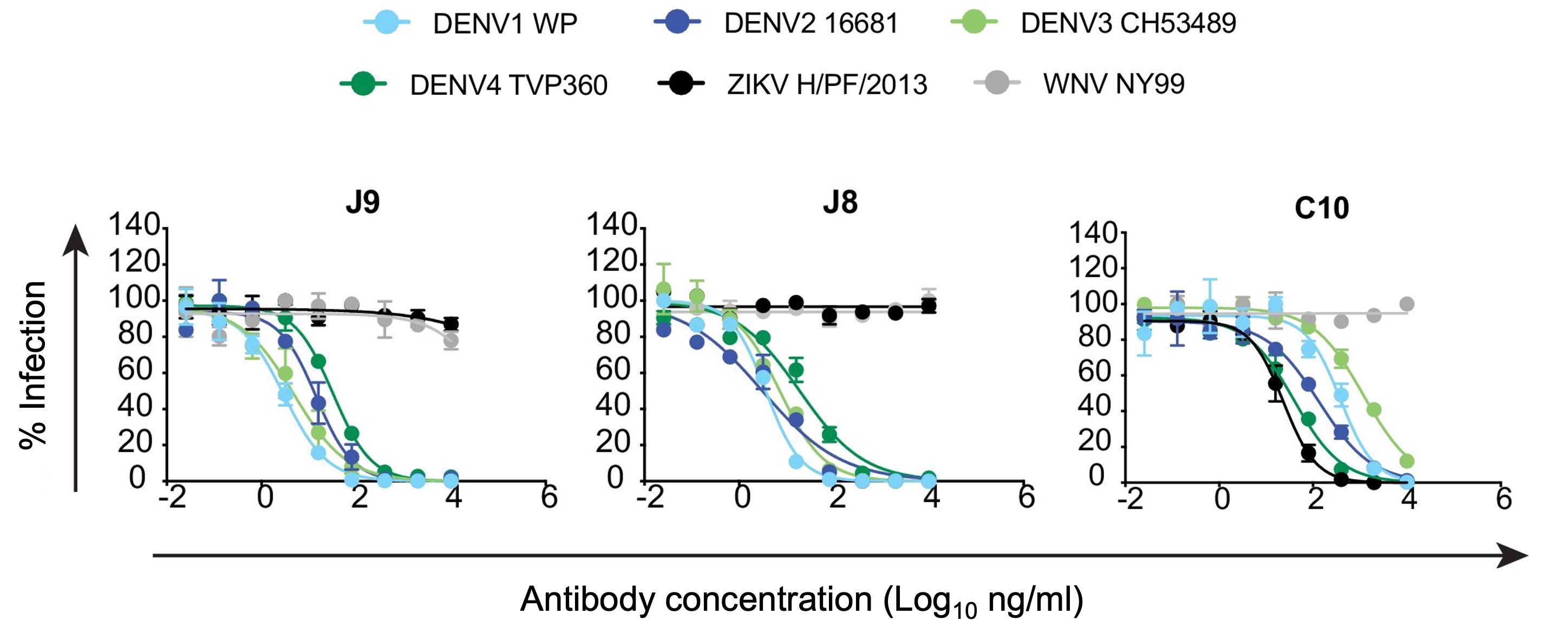
2) Novel therapeutic and prophylactic interventions. My long-term goal is to translate mechanistic findings from the viral entry and replication studies above into a dynamics-based approach to rationally engineer interventions such as vaccine antigens, therapeutic antibodies, RNA-based therapeutics and small molecule inhibitors. For example, traditional approaches to DENV vaccine design have been particularly challenging. A few human-derived broadly neutralizing antibodies have now been identified that potently neutralize DENV 1 to 4, and in some cases, ZIKV (Figure 4). However, it is not clear how broadly neutralizing DENV Abs overcome conformational variability within and between serotypes to achieve broad neutralization. My objective is to define the conformations stabilized by broadly neutralizing antibodies such as J9 and J8 (PMID 31820734), to inform the rational design of antigens with reduced dynamics and stable exposure of these protective E epitopes. The long-term goal: to elicit broadly protective antibodies without the serotype-specific or non-neutralizing pathogenic responses associated with antibody-dependent enhancement (ADE) of DENV infection and severe disease, which can occur with pre-existing immunity to DENV or other antigenically related flaviviruses. |
|
|
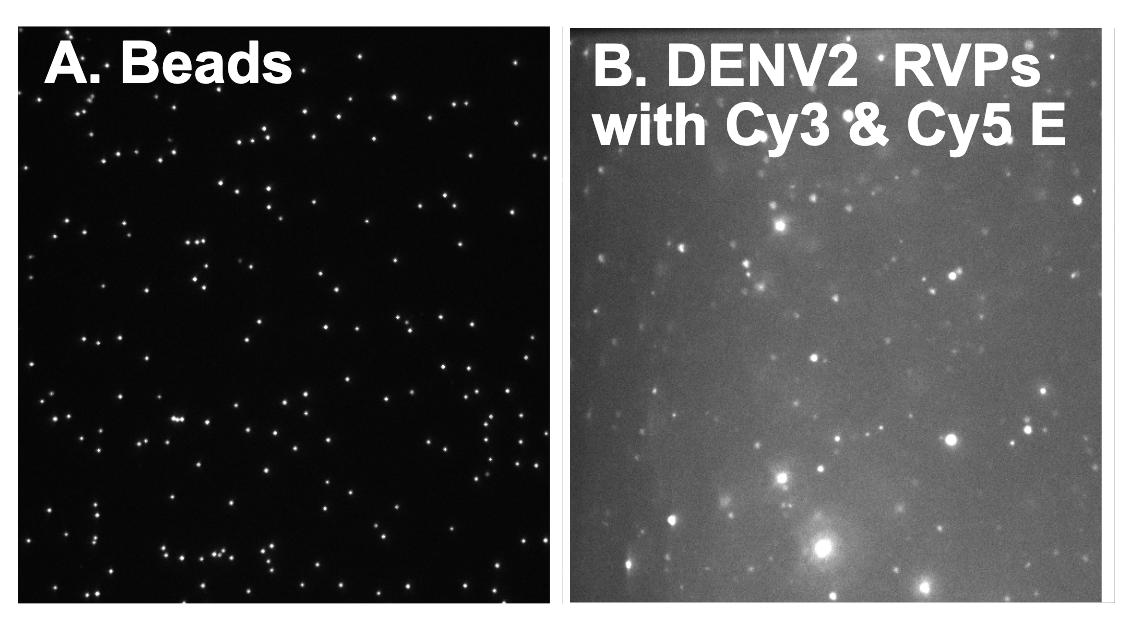
I currently use reporter virus particles (RVP) for smFRET imaging of Class II viral fusogens (Figure 5). RVPs are non-replicating virions that are structurally similar to wild-type virus, containing E and all other structural and non-structural flavivirus proteins. The RVP system is regularly used in the flavivirus field. It allows investigators to study the structural proteins of these viruses in their native context (i.e. as part of an entry-competent, replication incompetent virion), which would otherwise require facilities and equipment with enhanced biosafety measures. The Munro lab's custom-built prism-based TIRF microscope, Mewtwo, is located in the lab's BSL2 space. This research approach is relevant and adaptable to other Class II viral fusogens which share structural and mechanistic features with DENV E. It will also generate novel tools and information on prototype pathogens for pandemic preparedness, directly informing strategies to develop medical countermeasures against viruses with pandemic potential. |
Full list of publications available at Google Scholar.