


Pappas Stem Cell Differentiation Core

Growing Stem Cell-Derived Pancreatic Islets to Improve Transplantation Therapy for Type 1 Diabetes
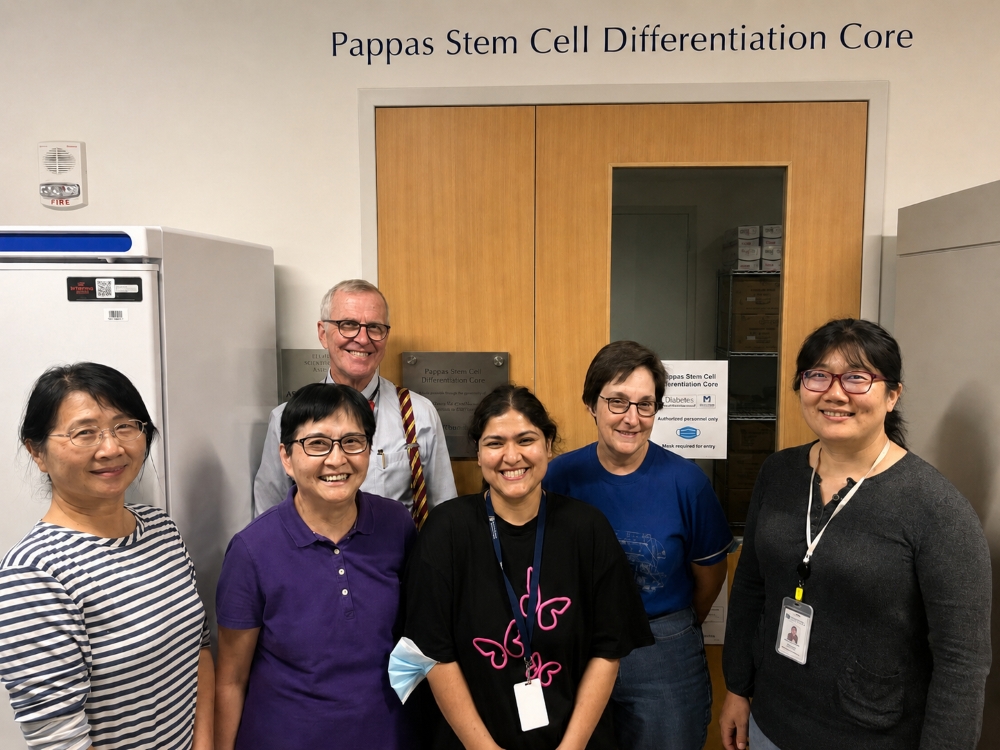
The Pappas Stem Cell Differentiation Core (SCDC) at the UMass Chan Medical School Diabetes Center of Excellence produces human stem cell-derived pancreatic islets for laboratories throughout UMass Chan and research collaborators working to better understand type 1 diabetes and develop new therapies. Established with seed funding from the Arthur M. and Martha R. Pappas Foundation, the SCDC provides researchers with a reliable source of insulin-producing cells for studies ranging from understanding how the immune system attacks beta cells to genetically engineering stem cell-derived islets for potential transplantation therapies.
The Pappas SCDC supports collaborative research at UMass Chan and the Breakthrough T1D Barbara Cammett Center of Excellence in New England, including studies using humanized mouse models to evaluate how stem cell-derived islets function and interact with the human immune system. The ultimate goal is to make it possible to transplant stem cell-derived islets into people with type 1 diabetes without requiring toxic immunosuppressive therapy.
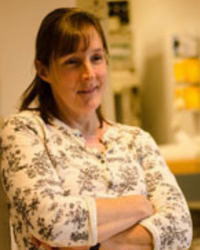
Sambra Redick, PhD
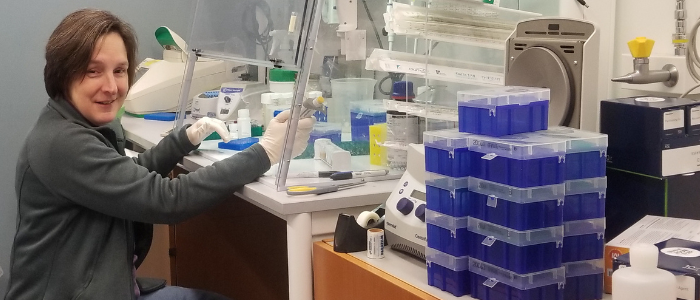
Sambra Redick, PhD, is a senior research scientist in the laboratory of David Harlan, MD, and leads stem cell-derived islet production in the Pappas Stem Cell Differentiation Core. Since joining the Diabetes Center of Excellence in 2015, Dr. Redick has played a key role in advancing the study of pancreatic islets and beta cells.
Her work focuses on the functional and transcriptional profiling of pancreatic islets from donors with and without diabetes. As members of the Network for Pancreatic Organ Donors with Diabetes, known as nPOD, the UMass Chan DCOE receives pancreas samples from deceased human donors. Dr. Redick has developed techniques to remove and study single islets from those pancreas slices, making it possible to obtain transcriptional profiles of individual cells within the islets.
For Dr. Redick, the interest in cell biology began early, with a fourth-grade science project on DNA replication. She grew up in South Carolina and became the first person in her family to finish college. Encouraged by her family to pursue higher education, she decided by junior high that she wanted to earn multiple degrees.
She studied genetics at the University of Georgia before earning both her master’s degree and PhD in molecular biology at Princeton University, where she initially planned to study virology.
Her first postdoctoral fellowship was at the University of North Carolina, where she worked in a lab that used mouse embryonic stem cells to study blood vessel development. During that time, she realized she did not want to run her own laboratory but found that she loved performing bench research, hands-on experiments, and troubleshooting scientific problems.
Her second postdoctoral position was at Duke University, where she worked on two very different research projects. She published papers on cell adhesion and anti-adhesion before transitioning to the bacterial cell division side of the lab.
Joining UMass Chan Medical School and the Diabetes Center of Excellence
Dr. Redick joined UMass Chan Medical School in 2003 and worked in the laboratory of Stephen Doxsey, PhD, where she focused on cell division. After 12 years in the Doxsey lab, her campus network helped lead her to a position in the Harlan lab at the UMass Chan Diabetes Center of Excellence.
At that time, the Harlan lab was studying donated pancreatic islets from deceased donors with and without diabetes. The islets were separated into single cells, and Dr. Redick performed RNA sequencing to examine the transcriptome of those cells — the complete set of messenger RNA molecules that reflects which genes are being expressed.
 The lab was looking for differences between beta cells from people with type 1 diabetes and those from people without diabetes. By comparing gene expression in cells from donors at different stages of the disease process, researchers hoped to better understand whether beta cells help attract immune cells that trigger the autoimmune attack or whether they are simply innocent bystanders.
The team soon realized that sorting cell groups by insulin expression could cause important information to be missed, because beta cells from people with type 1 diabetes often produce little insulin. Dr. Redick began developing new techniques to interrogate single cells regardless of hormone expression.
Today, the lab captures individual islet cells using molecular biology methods that isolate single cells and label each cell’s unique gene-expression profile. This process continues to generate enormous amounts of data, which are analyzed by the DCOE’s bioinformatician to identify cell types by their gene-expression hallmarks and examine how individual gene-expression profiles vary.
Through this work, Dr. Redick is helping researchers better understand what happens to pancreatic islet cells during type 1 diabetes. Her work in the Pappas SCDC also supports another major goal in the field: developing a renewable source of insulin-producing cells that could one day be transplanted safely and effectively into people with type 1 diabetes.
Resolving a 30-year debate about beta cells and the immune system
By far the most significant genetic risk for T1D is driven by the expression of immune genes called “human leukocyte antigen class II” (HLA Class II). Yet many believed that human beta cells were incapable of expressing HLA Class II and other essential genes that support their function. Collaborative research in the Harlan Lab definitively showed that beta cells from individuals with T1D express these important gene products. Since these are immune system genes, this raises the question of whether this immune function is essential for what T cells do to trigger the autoimmune attack on beta cells.
Creating a tool to procure single islets
The Harlan lab believes that, since diabetes is a patchy disease with varying effects on islets of different sizes and cellular compositions, studying individual islets will be beneficial. Dr. Redick has developed techniques to separate single islets, including a halo of T cells around the edge of the islet, allowing them to study the importance of that ring of immune cells. They’ve developed a novel tool to punch and recover individual islets from living pancreas slices for more in-depth investigation.
Sam and her husband share their home with two cats. She enjoys growing a garden at home, especially vegetables that are unavailable locally. “I’m a southerner, so we have a big okra patch, purple top turnips with the greens on,” she said. “All the cliches of southern food.” She enjoys cooking and compares it to lab work, because you follow a protocol, except “the experiment rarely fails so badly that you can’t have dinner,” she joked.
Sam’s favorite part of living in New England is the four seasons. She enjoys fall foliage, winter sports like cross-country skiing, and spring and summer activities such as hiking, kayaking, and cycling.
Sam's Favorites
TV Shows: M.A.S.H., Star Trek Next Generation, Big Bang Theory
Movies: The Princess Pride, Harold and Maude
Restaurants: Eller’s for breakfast, Fatima’s Café, Nancy Chang’s, BT’s Smokehouse
Hobbies: Steam train enthusiast